
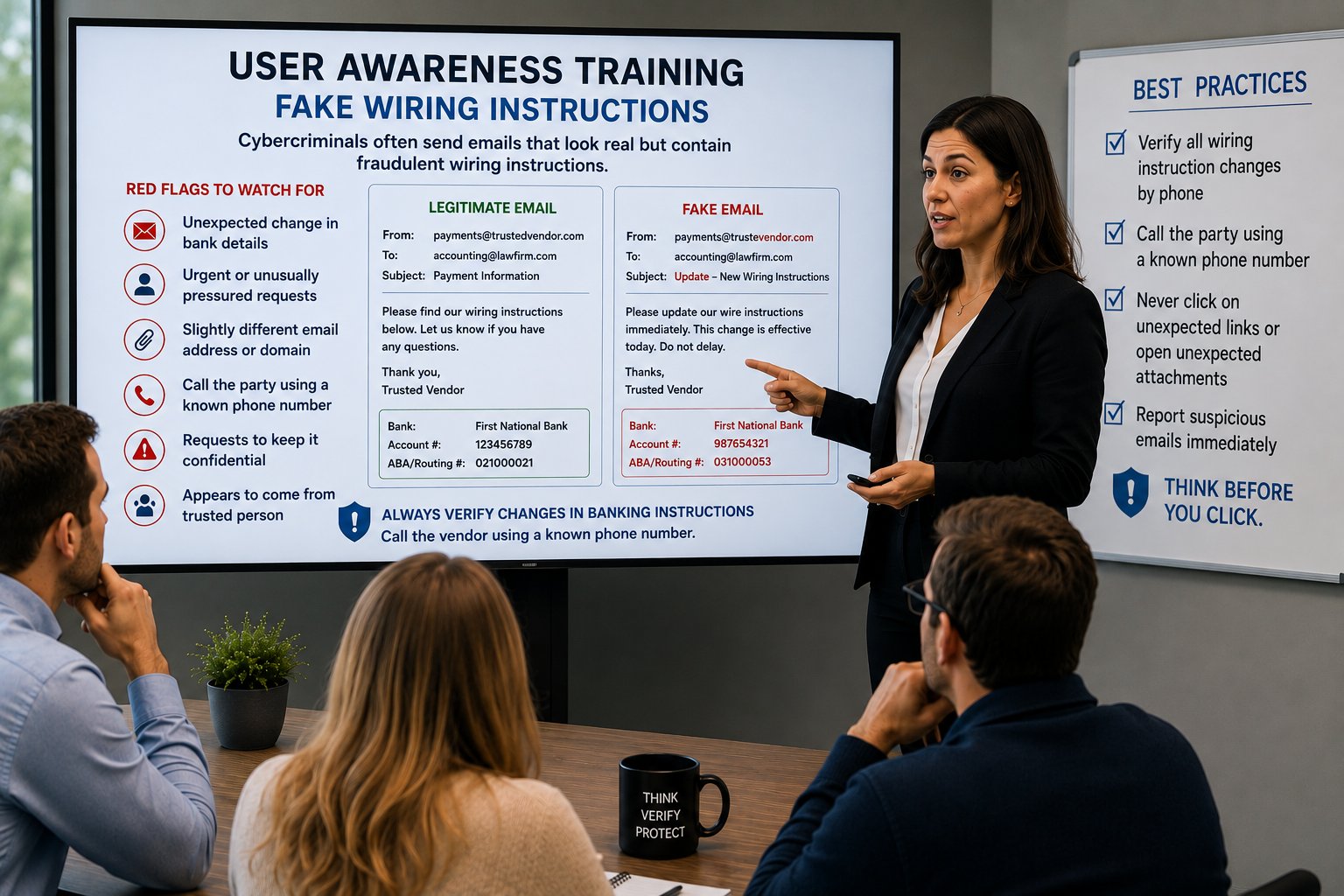
Direct Answer
Cybersecurity awareness training teaches employees how to recognize and respond to common cyber threats before they become security incidents. A complete training program typically includes phishing awareness, password security, Multi-Factor Authentication (MFA), safe web browsing, social engineering, mobile device security, and procedures for reporting suspicious activity.
Most law firms should provide cybersecurity awareness training to every employee at least annually. Short refresher training and periodic phishing simulations throughout the year help reinforce good security habits and keep cybersecurity top of mind.
Why This Matters
Cybersecurity incidents often begin with a human mistake rather than a technology failure.
A single click on a phishing email or an employee who unknowingly discloses confidential information can expose an entire law firm to unnecessary risk.
Regular cybersecurity awareness training helps employees recognize these situations before they become security incidents.
Editor's Insight
Cybersecurity awareness training isn't about teaching employees technology, it's about teaching them to recognize risk.
Most employees don't need to understand how ransomware works.
They need to recognize suspicious emails, unexpected requests, and situations that require additional verification.
What Should Cybersecurity Awareness Training Include?
An effective cybersecurity awareness program should teach employees how to recognize the most common threats they are likely to encounter during a normal workday.
- Phishing Awareness
Employees should learn how to identify suspicious emails, malicious links, unexpected attachments, and fraudulent requests for confidential information.
Phishing remains one of the most common methods attackers use to gain access to business systems.
- Password Security and Multi-Factor Authentication
Employees should understand how to create strong passwords, avoid password reuse, and use Multi-Factor Authentication wherever it is available.
A stolen password should never be enough to access your law firm's systems.
- Social Engineering
Attackers don't always use technology.
They often attempt to manipulate people by pretending to be clients, vendors, coworkers, or executives.
Employees should know how to verify unexpected requests before taking action.
- Safe Internet and Mobile Device Use
Employees should understand the risks associated with public Wi-Fi, personal devices, unauthorized software, and unsafe websites.
Simple habits can significantly reduce unnecessary risk.
- Reporting Suspicious Activity
Employees should know exactly who to contact if they receive a suspicious email, believe they clicked a malicious link, or notice unusual computer activity.
Reporting concerns promptly often prevents a small incident from becoming a larger one.
How Often Should Training Be Conducted?
Most law firms should provide cybersecurity awareness training at least annually for every employee.
However, cybersecurity awareness should not become a once-a-year event.
Many firms supplement annual training with:
- Periodic phishing simulations.
- Short refresher training sessions.
- Training for new employees during onboarding.
- Additional training when new cyber threats emerge.
Regular reinforcement helps employees retain what they learn.
A Real-World Example
An attorney received an email appearing to come from a trusted vendor requesting confidential information.
Because we regularly update our clients on the latest cybersecurity threats they suspected it was malware and forwarded the email to us for confirmation, before clicking the link.
The email was fraudulent.
A simple pause to think before clicking, saved the day. It is not a bother for us to confirm.
It is much easier to prevent a breach than to recover from it.
Two Questions We Hear
Is annual training enough?
Annual training establishes a foundation.
Periodic reminders and phishing simulations throughout the year help employees recognize evolving threats and reinforce good security habits.
Do attorneys need cybersecurity awareness training?
Yes.
Cybersecurity awareness training should include every employee who accesses the firm's systems, including attorneys, partners, administrators, and support staff.
Cybercriminals do not limit their attacks to a particular job title.
How Avenue M Helps
Avenue M helps law firms throughout New York and New Jersey develop cybersecurity awareness programs that support cyber insurance requirements, cybersecurity frameworks, and everyday business operations.
We help clients:
- Deliver employee cybersecurity awareness training.
- Conduct phishing simulations.
- Reinforce security best practices.
- Educate new employees.
- Strengthen the human side of cybersecurity.
Three Key Takeaways
- Cybersecurity awareness training isn't about teaching employees technology, it's about teaching them to recognize risk.
- Every employee who uses your firm's technology should participate in cybersecurity awareness training.
- Annual training establishes the foundation, ongoing reinforcement builds lasting security habits.
Related Articles
- Why Is Multi-Factor Authentication (MFA) Essential for Law Firms?
- How Should Law Firms Prepare for Cyber Insurance Questionnaires?
- What Should Every Law Firm Include in an Incident Response Plan?
- What Cybersecurity Requirements Should New York and New Jersey Law Firms Meet?
Technology should help your law firm practice law more securely, efficiently, and confidently, not become another distraction.